
Room Only
4.5Excellent966 reviews
Villa Manos
Fira-Karterados, Santorini
- Flights included
- 18 Oct 2027 – 7 Nights
- Room Only
€409pp
Santorini Holidays


The whitewashed villages perched on that edge are the reason the island looks like nowhere else in Greece, and the reason photographs of it are so instantly recognisable. The eruption is also one of the theories put forward for the legend of Atlantis, which adds an extra pull to the place.

The sand here is black, grey, or red rather than gold — Kamari and Perissa run for kilometres in dark volcanic shingle, while the Red Beach below Akrotiri sits beneath rust-coloured cliffs. The dark sand holds the heat, so beach shoes are a sensible buy. It's a different kind of beach day, and worth knowing before you book.

Akrotiri is a Minoan town buried by the eruption and preserved almost intact — multi-storey buildings, a drainage system, and frescoes, often called a Greek Pompeii but more than a thousand years older. Ancient Thira, high on the Mesa Vouno ridge, adds a Hellenistic and Roman layer for anyone who wants more than a single site.

Oia faces directly west across the open Aegean, and the evening light over the caldera draws a crowd every night of the season. It's a genuine event rather than a marketing line — arrive a good hour early to claim a spot on the wall, or watch from a quieter vantage point and skip the crush entirely.

The native Assyrtiko grape grows in low basket-shaped vines called kouloura, trained close to the ground to shield the fruit from wind and trap morning moisture. The sweet amber Vinsanto, sun-dried for days before pressing, has been made here for centuries, and the volcanic soil gives the whites a mineral, almost smoky edge you won't find on the mainland.

With the whole island around 73 square kilometres, you can be at the ancient site in the morning, a black-sand beach by lunch, and a caldera taverna for the sunset — no long transfers eating into the day. That compactness is a real advantage when you're working with a week.
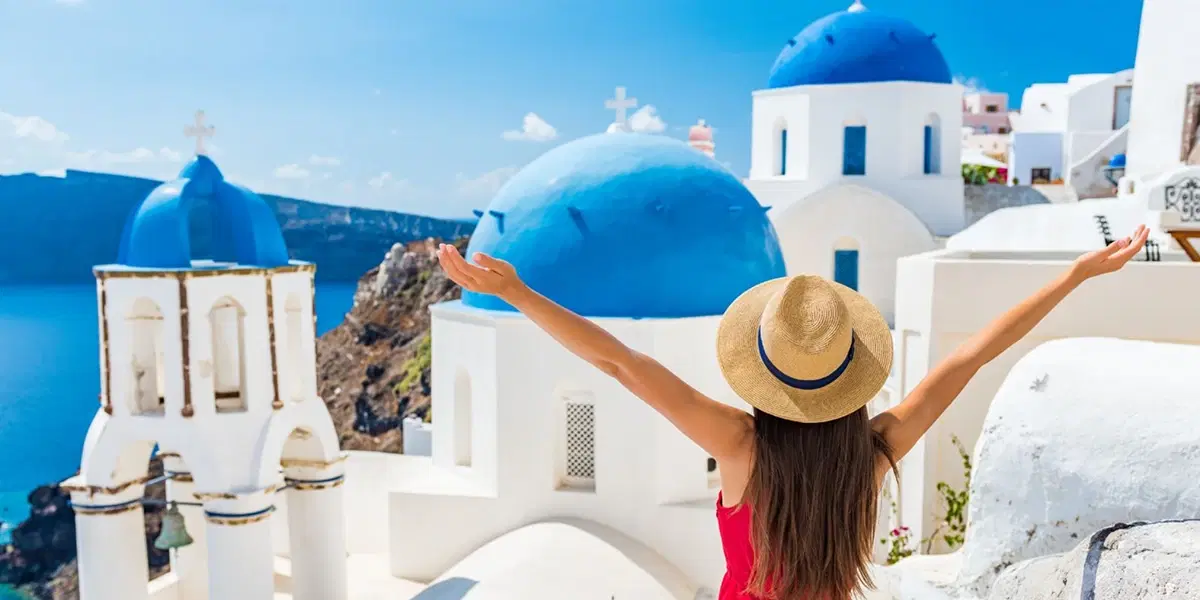
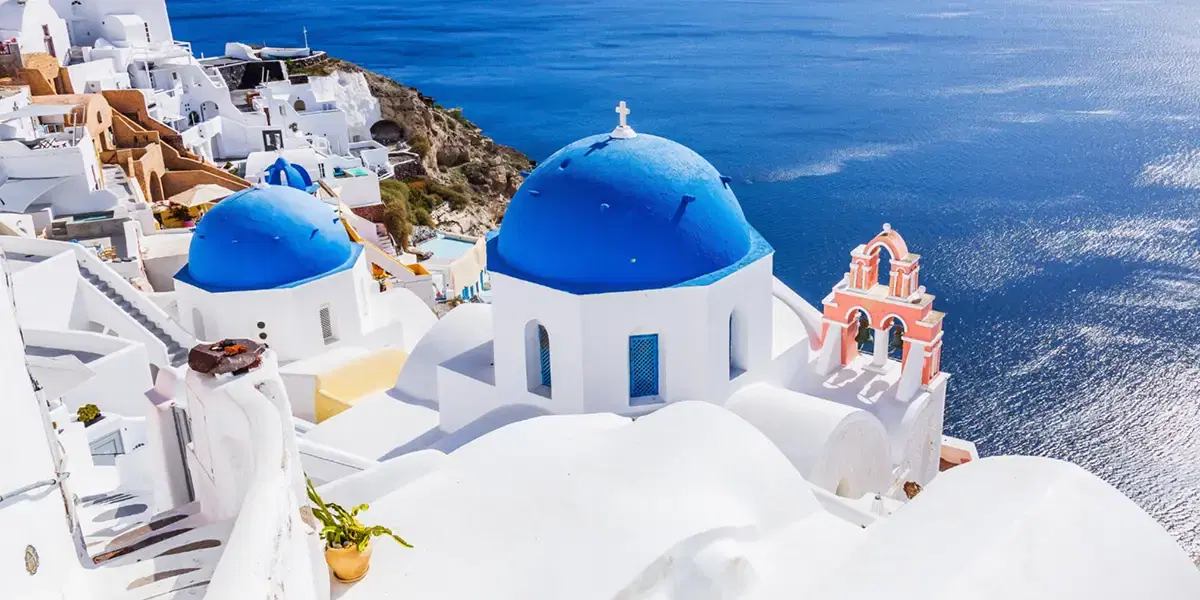
The island splits into clear zones, and the best of the places to visit in Santorini depend entirely on whether you're here for the view or the beach.
Oia (north tip): The postcard village — blue-domed churches, marble lanes, and the sunset everyone comes for. It's the most expensive base on the island and the prettiest, with cave-style suites and infinity pools cut into the cliff, and the best holidays to Santorini for couples almost always start here. Book the caldera-facing rooms early, as they're the first to go.
Fira (capital): Central, lively, and the transport hub — the bus network radiates from here, the cable car drops to the Old Port, and the caldera-edge walk to Oia begins on its doorstep. It's the most practical first-time base, with the widest range of bars, restaurants, and shops within walking distance of the cliff.
Imerovigli: A short stroll north of Fira and noticeably quieter, set on the highest point of the caldera rim with the Skaros Rock headland jutting out below. Couples who want the same view without the Oia crowds tend to settle here, and prices sit a step below Oia for a near-identical outlook.
Kamari & Perissa (east coast): Long, flat black-sand beaches backed by tavernas and bars, separated by the Mesa Vouno headland that carries the ancient ruins. These resorts stand out for value among cheap holidays in Santorini, with no real drop in beach quality or sea views, and a quick, frequent bus into Fira.
Pyrgos (inland): The island's old capital, climbing in tiers up to a Venetian castle with a full caldera panorama from the top. Calmer, cheaper, and a genuine working village, it makes a quieter base for anyone happy to drive to the beach.
Beyond the loungers there's a proper island to explore — volcanic, historic, and busy after dark.
Walk the caldera path: The cliff-top trail from Fira to Oia runs around 10 km past Firostefani and Imerovigli, with the crater on one side the whole way. Most people allow three to four hours and time it to finish for sunset; it's exposed, so wear proper shoes and carry water. Buses run back from Oia if you'd rather not retrace it.
Akrotiri & Ancient Thira: The Bronze Age town at Akrotiri sits under a modern roof, with paved streets and frescoed buildings frozen by the eruption. Ancient Thira, on a 360-metre ridge above Kamari, layers Hellenistic and Roman ruins with sea views both ways — reachable on foot, by car, or by the local minibus that grinds up the switchbacks.
Volcano & hot springs boat trip: Boats run from the Old Port out to Nea Kameni, the smouldering volcanic island at the centre of the caldera, where a short climb on loose ground reaches the crater rim. Most trips then anchor at Palea Kameni for a swim in the warm, rust-tinted sulphur springs.
Wine tasting in the vineyards: Estates like Santo Wines and Venetsanos pour Assyrtiko and Vinsanto on terraces directly over the caldera. A cluster of wineries near Pyrgos and Megalochori is easy to string together in an afternoon, and small-group tours handle the driving so you can taste freely.
An evening out in Fira: The capital holds most of the island's Santorini nightlife — caldera-view cocktail bars along the cliff edge, late-opening clubs near the main square, and rooftop spots that fill up once the sunset crowds drift back. It's social rather than a club-resort scene, and winds down earlier than Mykonos.
May, June, September, and early October are the standout months — warm enough to swim, comfortable for the cliff walks, and without the peak-summer crush at the Oia sunset. July and August are hottest and busiest, ideal if you want full heat and the liveliest evenings but worth booking well ahead.
Fira-Karterados, Santorini
€409pp
€409pp
Akrotiri, Santorini
€419pp
Perissa-Perivolos, Santorini
€459pp
Perissa-Perivolos, SantoriniClose to the beach
€399pp
Fira, Santorini1.0km from the beach
€409pp
Fira-Karterados, Santorini
€439pp
Perissa-Perivolos, SantoriniClose to the beach
€439pp
€399pp
Perissa-Perivolos, Santorini
€459pp
Save €32
From €515€499pp
Fira-Karterados, Santorini
€509pp
Imerovigli, Santorini3.0km from the city centre
€509pp
Save €27
From €503€489pp
Perissa-Perivolos, SantoriniClose to the beach
€449pp
€409pp
€409pp
Perissa-Perivolos, SantoriniClose to the beach
€459pp
€419pp
€419pp