Lake Garda Holidays

Swimming, sailing, windsurfing, kayaking, stand-up paddleboarding, and boat hire are available at every major resort. Torbole and Riva del Garda are two of the best-known windsurfing venues in Europe, drawing competitive sailors and beginners in equal numbers.

The lake's position between the Alps and the Po Valley creates a microclimate with warm, stable summers and mild spring and autumn seasons. Average July temperatures reach 28°C; even May regularly clears 22°C.

At 52 km long and up to 17 km wide, the lake is large enough to feel genuinely different from one end to the other — southern shores Mediterranean and relaxed, the northern tip Alpine and dramatic — yet the ferry network connects all of it without needing a car.

Sirmione's Roman ruins and 13th-century castle, Malcesine's Scaligero fortress above the water, and Gargnano's faded Riviera grandeur are all distinct enough to justify separate visits — not variations on the same theme.

Garda's cooking draws on both Lombard and Veneto traditions, with lake fish dishes, local olive oil, and wines from the Bardolino and Lugana DOC zones that rarely appear outside the region. The olive groves around Gargnano produce oil with PDO status — among the most northerly in Italy.

Verona is 30 minutes from the southern lake by car or direct bus. Venice is reachable in under two hours by train from Desenzano. Few Italian lake destinations offer this range of cultural options within a short transfer.
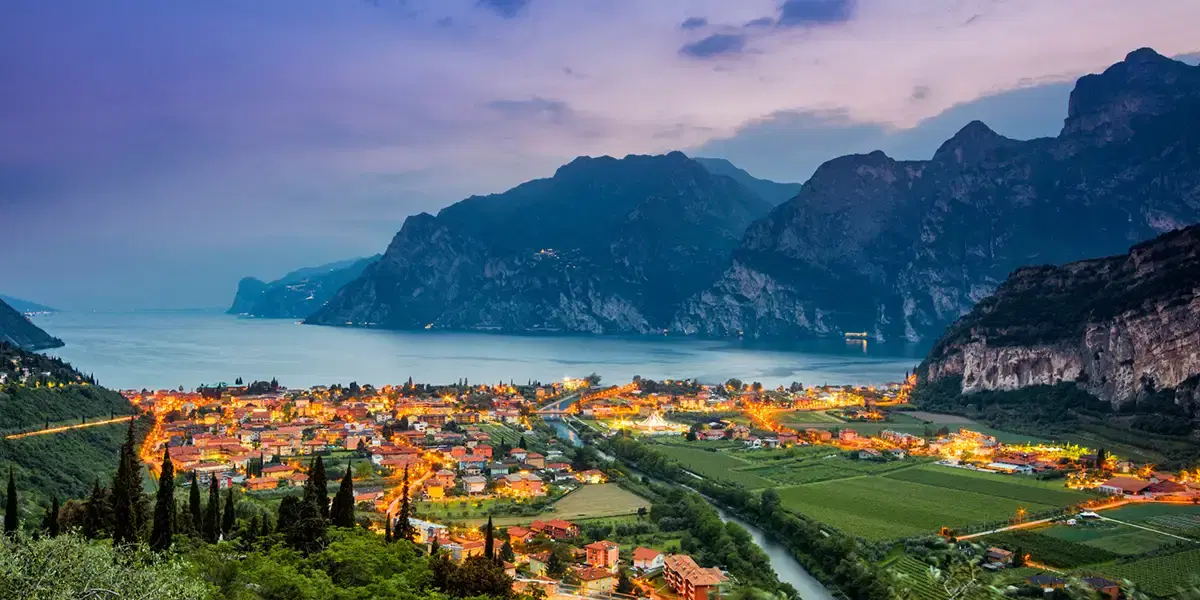
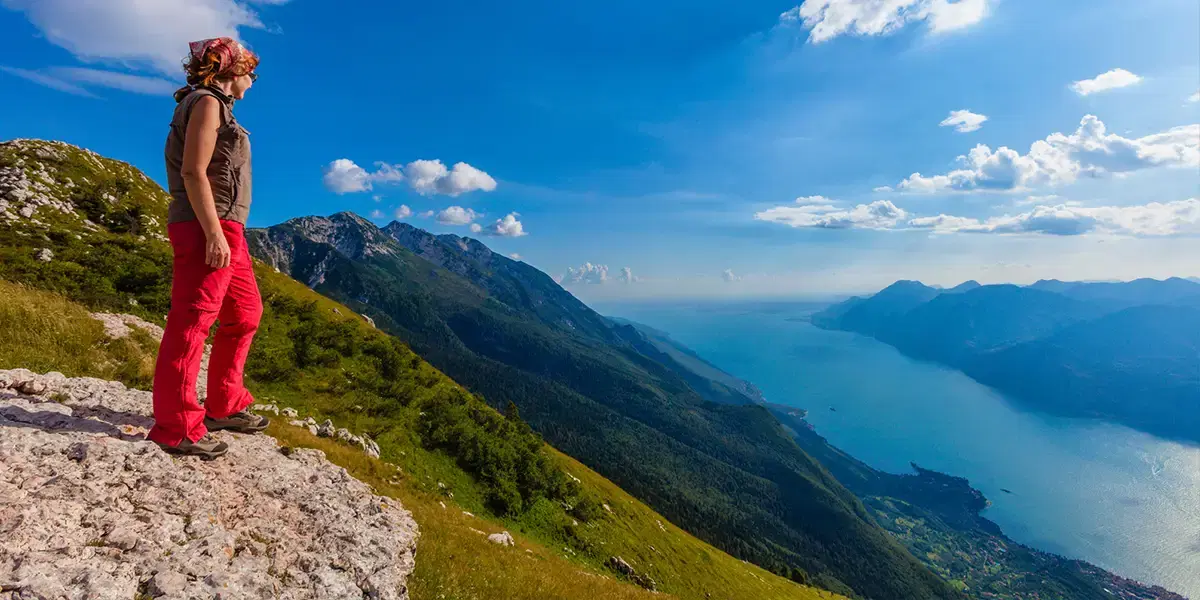
The lake divides clearly into distinct zones, each with a noticeably different character. The best Lake Garda sightseeing are:
Sirmione: Sitting on a narrow peninsula that pushes into the southern lake, Sirmione is the destination most of our customers choose for their holidays to Lake Garda — the Roman ruins of Grotte di Catullo at the tip, the Scaligero Castle guarding the entrance, and thermal spa facilities make it one of the most complete resorts on any Italian lake. Worth knowing before you book: the historic centre is pedestrianised, which keeps it genuinely pleasant in summer.
Riva del Garda: At the northern tip where the lake narrows between cliffs, Riva is where the wind reliably arrives by mid-morning — making it the go-to choice for sailors and windsurfers. The old town is intact and worth an evening; the harbour square is particularly good for dinner. Transfers from Verona take around 90 minutes.
Malcesine: Midway up the eastern shore, Malcesine offers something the southern resorts cannot — a cable car (Funivia del Monte Baldo) that climbs to 1,748 m with views over the full length of the lake. The Scaligero castle and the pedestrianised historic centre keep it worth visiting even without the mountain.
Bardolino: On the south-eastern shore, Bardolino earns consistent praise from families for its long, flat lakefront, reliable shallow water, and its position at the centre of one of Italy's better-known wine zones. Several of our Lake Garda package deals in this area include properties within walking distance of the ferry terminal.
Gargnano: The least-changed of the western shore's Riviera towns, Gargnano sits between Salò and Limone and has held on to its pre-war grandeur better than either. It suits couples who want beauty without the coach-party footfall — and the local olive oil trail gives it a purpose beyond aesthetics.
Beyond the lake itself, the range of things to do in Lake Garda runs considerably wider than most visitors expect.
Scaligero Castles: The Della Scala family built fortresses at Sirmione, Malcesine, Torri del Benaco, and Lazise across the 13th and 14th centuries — each different enough to make visiting two or three genuinely worthwhile. Sirmione's is the most dramatic; Malcesine's is the most photographed.
Monte Baldo by cable car: The Funivia Monte Baldo from Malcesine runs to 1,748 m in two stages, with a rotating cabin that gives every passenger the full panorama. Hiking trails fan out across the plateau at the top; the descent on foot through alpine meadows to Malcesine takes around three hours.
Grotte di Catullo, Sirmione: The largest Roman villa ruins in northern Italy, built across the headland above the southern lake. The on-site museum holds mosaics and artefacts excavated from the site. Admission is modest and the setting — ruined arches above the water — is unlike anything else on the lake.
Windsurfing and sailing at Torbole: The Pelèr wind blows north to south from early morning; the Ora reverses it from midday. This daily cycle makes Torbole one of the most predictable sailing environments in Europe. Several schools at Torbole and Riva offer courses from beginner to advanced across the season.
Gardaland and Caneva Aquapark: Gardaland, near Peschiera, is one of Italy's largest theme parks and a consistent priority for families with children aged 5 to 14. Caneva Aquapark, directly adjacent, is the water-park addition that makes the area a two-day proposition for most families. Transfers from southern lake resorts are straightforward.
June and September are the standout months — warm enough to swim, uncrowded enough to move around comfortably, and priced below peak summer. July and August deliver the most reliable heat and the liveliest atmosphere, but resorts fill quickly and prices reflect it. May works well for walking and sightseeing.